
Expertise you can trust: Kane Jewelry is known for its award-winning jewelry designs and seamless, innovative shopping experience. This Kane Jewelry diamond guide explains how the 4 C's of diamonds — cut, color, clarity, and carat — determine a diamond's quality grade. All Kane Jewelry guides are meticulously researched and reviewed by our certified gemologists, content, editorial, and brand teams before publication to ensure industry-leading excellence and accuracy.
4 C’s of Diamonds Charts
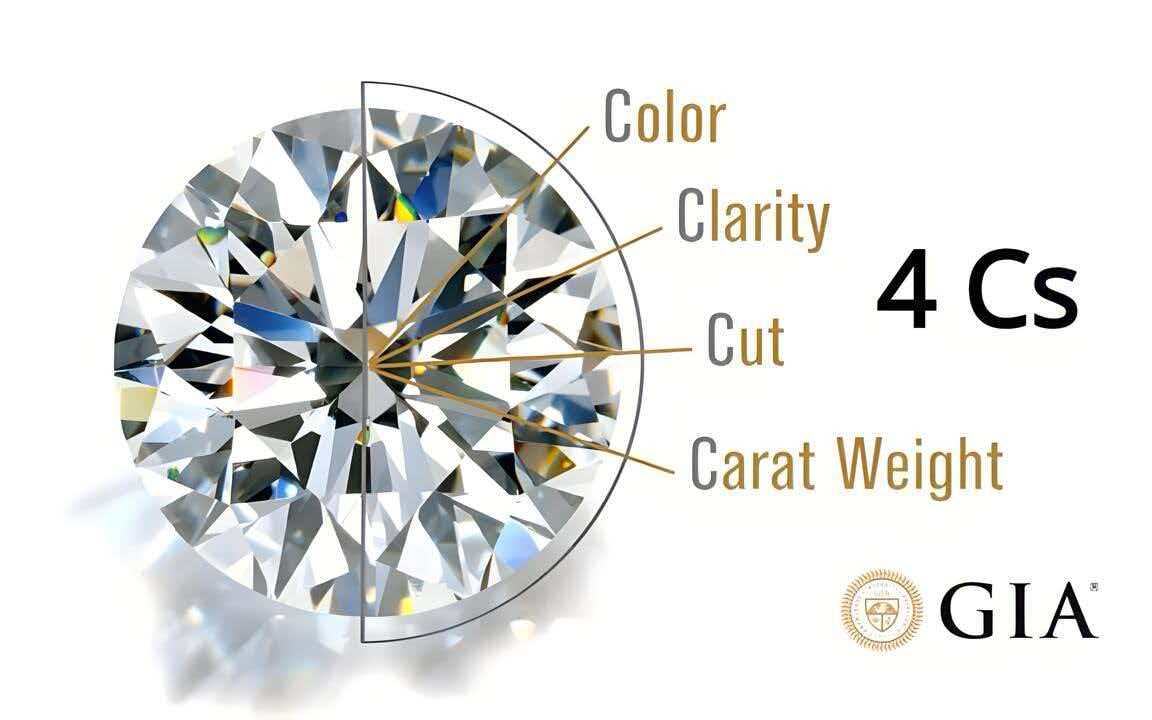
Created by the Gemological Institute of America (GIA) in the 1940s, the 4 C's — cut, color, clarity, and carat — serve as the universal standard for assessing diamond quality. Each C represents a distinct quality attribute, measured on its own scale:
- Cut: Graded from Excellent to Poor on the GIA scale and Ideal to Poor on the International Gemological Institute (IGI) scale
- Color: Graded from D (colorless) to Z (light yellow or brown)
- Clarity: Graded from Flawless (FL) to Included (I3)
- Carat: Measured in metric carats, where one carat equals 200 milligrams
Diamond Cut
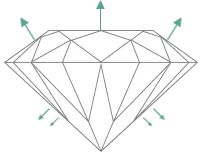
Cut determines how effectively a diamond's facets interact with light, creating the gem’s signature brilliance and sparkle. Unlike other diamond characteristics that form during the growth process, cut quality results from the diamond cutter's skill and precision. A masterfully cut diamond reflects optimal brilliance, disperses vivid fire-like colors, and creates dynamic sparkle patterns when moved (this is called scintillation).
The IGI grades diamond cut from Excellent to Poor based on proportions that maximize light performance. An Excellent cut diamond returns nearly all light that enters the gem, resulting in exceptional sparkle and visual impact. In contrast, a Poor cut allows light to escape through the pavilion (bottom), resulting in a dull appearance regardless of the diamond's other qualities.
Fair
Good quality cut which reflects some light while maximizing weight. While not as brilliant as a good cut, still a quality diamond.
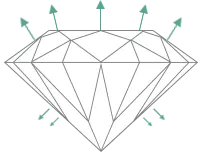
Good
Premium quality cut to optimize the size without sacrificing quality or beauty. Reflects most light that enters.
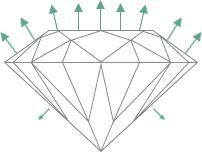
Very Good
Superior quality cut that reflects nearly as much light as the ideal cut while at a substantially lower cost.
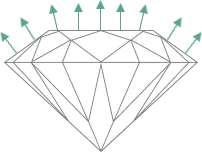
Excellent
Exquisite quality cut to create the optimal combination of brilliance and fire. Reflects nearly all light that enters the diamond.
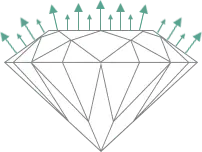
Ideal
Cut to the most exacting standards. These diamonds have the most desirable dimensions and are proportioned to return the maximum possible light.
D Color
Absolutely colorless or icy white. The highest color grade—extremely rare and most expensive.
E Color
Colorless. Only miniscule traces of color can be detected by an expert gemologist—a rare, high quality diamond.
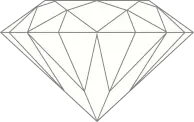
F Color
Colorless. Slight color detected by an expert gemologist, but still considered a “colorless” grade—a high-quality diamond.
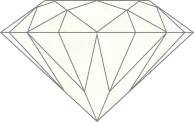
G Color
Near-colorless. Color noticeable when compared to diamonds of better grades, but offers excellent value.
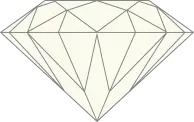
H Color
Near-colorless. Color noticeable when compared to diamonds of better grades, but offers excellent value.
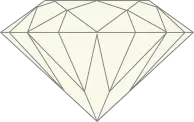
I Color
Near-colorless. Slightly detected color—a good value.
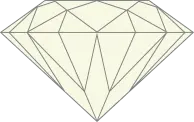
J Color
Near-colorless. Slightly detected color—a good value.
Diamond Color
Diamond color refers to the absence of color, with completely colorless diamonds being the most valuable and rare. The GIA color grading scale ranges from D (colorless) to Z, with each letter grade representing a subtle increase in color saturation. Diamonds that fall outside this range — such as vivid pinks or blues — are classified as "fancy colored" and are evaluated differently.
Color becomes increasingly noticeable as carat weight increases, making color grade particularly important when selecting larger diamonds. Strategic color selection should balance budget considerations with:
- Your chosen mounting style (yellow gold can make near-colorless diamonds appear whiter)
- Diamond size (larger diamonds reveal color more readily)
- Diamond shape (step-cut emerald and asscher shapes tend to display more color than brilliant cuts, which mask color with their superior light-dispersing properties)
Diamond Clarity
Clarity measures how free a diamond is from inclusions (internal characteristics) and blemishes (surface flaws). The GIA clarity scale ranges from Flawless to Included. Most diamonds fall somewhere in between, with inclusions that are microscopic and don't impact their beauty.
The impact of inclusions varies dramatically depending on their size, number, and position. The location of an inclusion matters as much as its size — an inclusion directly under the table (top facet) affects appearance more than one hidden near the girdle (edge). This makes each diamond's clarity assessment nuanced and highlights the value of viewing diamonds individually rather than relying solely on certification.
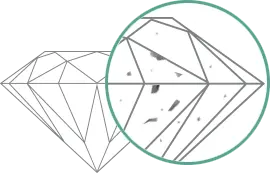
SI2
Slightly included 2. Inclusions are visible under 10x magnification and may be visible with an unaided eye. More inclusions than SI1.
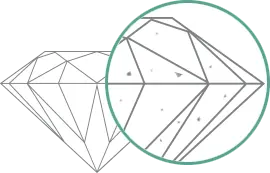
SI1
Slightly included 1. Inclusions are visible under 10x magnification, but may not be very visible with an unaided eye.
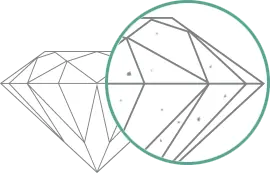
VS2
Very slightly included 2. Difficult to see inclusions under 10x magnification. Typically cannot see inclusions with the naked eye. Slightly more inclusions than VS1.
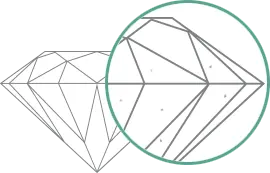
VS1
Very slightly included 1. Difficult to see inclusions under 10x magnification. Typically cannot see inclusions with the naked eye.
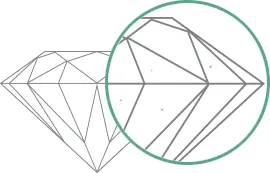
VVS2
Very very slightly included 2. Very difficult to see under 10x magnification. Slightly more inclusions than VVS1.
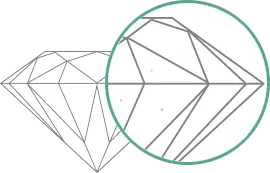
VVS1
Very very slightly included 1. Very difficult to see under 10x magnification.
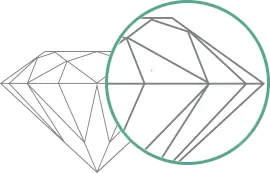
IF/FL
Internally Flawless. No internal flaws.
Flawless with no internal or external flaws. Extremely rare and valuable.
Diamond Carat
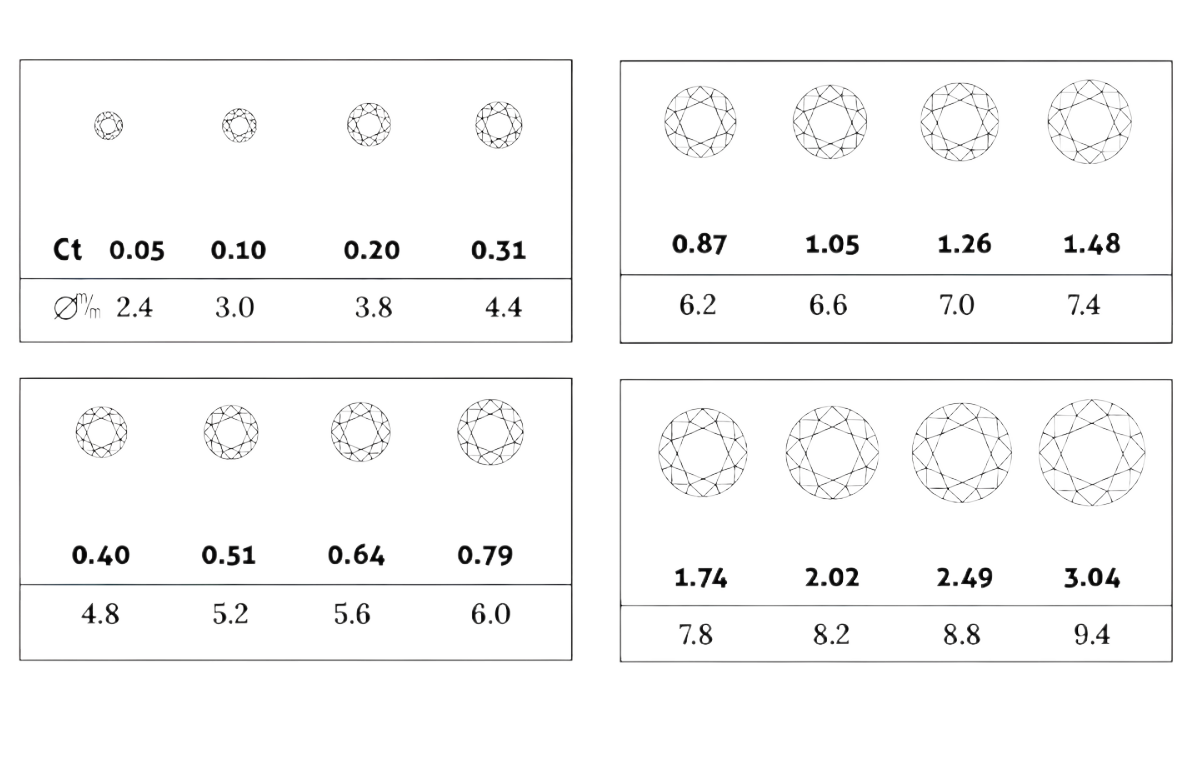
Carat is a measurement unit that describes a diamond's weight, with one carat equaling 200 milligrams (roughly the weight of a paperclip). It's important to understand that two diamonds of identical carat weight can appear noticeably different in size depending on their shape and cut. A well-cut diamond maximizes surface area and light performance, often appearing larger than a poorly cut gem of equal weight.
For maximum value, consider diamonds just below popular weight thresholds (0.9 instead of 1.0 carat, 1.9 instead of 2.0 carats), where prices often drop significantly without a perceptible difference in visual size.